Increasing sensitivity towards the environment is going to stay in the trend and hence spur innovation within brick manufacturing processes in order to trim carbon footprint and improve energy efficiency. Also, regional regulatory policies and building codes will significantly contribute towards changing the market scenario and encouraging the adoption of green building materials such as bricks. The evolving consumer preferences and regulatory frameworks are also indicative of future landscapes that may take place within the global brick market.
Key Questions Answered In The Report

These versatile units serve as the fundamental building blocks for structures ranging from simple walls to elaborate architectural designs. The production process involves molding the raw materials, followed by drying and firing in kilns to achieve durability and strength. Bricks come in various types, including common bricks for general use, firebricks for high-temperature applications, and specialized bricks with specific characteristics.
Brick Lane Market Vintage- The Vintage Market

Government policies and developmental activities involved in construction also facilitate the demand of these products since bricks form the core component of construction of roads, schools, hospitals and other structures. In an era where construction trends are shifting towards green building practices and cutting-edge design aesthetics, the lack of innovation in the bricks market poses a challenge. Infrastructure renewal and urban renewal in developed economies sustain the demand for high-quality bricks, which must strictly meet regulatory standards.
Public-sector projects now embed minimum recycled-material thresholds, pushing plants to integrate glass cullet and combusted solid waste into mixes. Manufacturers that verify cradle-to-site life-cycle data lock in specification advantage for renovation and public procurement tenders. The bricks market faces a significant restraint in the form of a lack of innovation in manufacturing techniques and designs. Traditional brick production methods have seen limited advancements, potentially hindering the market’s ability to meet evolving demands in the construction industry.
Global Brick Market Is Estimated To Reach $2,150,95124 Million By 2031
- Collaborations between architects and brick manufacturers have led to the development of innovative designs that go beyond conventional rectangular shapes.
- They are usually dimensioned 3⅝ x 2¼ inches in height and thickness, respectively, and used for a wide range of building projects.
- The Tea Rooms also hosts some retail gems for beauty, wellness, and culture offering a mix of beauty products, jewellery, and prints from around the globe.
- If you’re looking for some bric-a-brac treasure, hunting for a bargain, antique shopping, or in the mood for endless street food options then the bustling Brick Lane Market is the place to be.
- From Bigbloc Construction Ltd. in North America to the Brampton Brick in Europe, all these substantial contributors have been major components in the technological advancement and market expansion alike.
- Clay bricks, sand lime bricks, fly-ash clay bricks, and many such specialized variants fulfill various conditions of the environment and architectural needs.
Porotherm clay units deliver superior thermal insulation in Australian pilots, matching structural codes while lowering embodied energy. Digital design tools such as BIM and real-time sensor feedback help optimize dimensions, enabling near-zero off-cuts on-site. Heidelberg Materials reports AI-guided batching systems that trim cement use by 20%, a benefit passed along to brick lines dedicated to modular packages. The global bricks market size accounted at USD 1.74 trillion in 2024 and is expected to be worth around USD 2.36 trillion by 2034, at a CAGR of 3.09% from 2025 to 2034. Different regions around the world have their own brick manufacturing traditions, leading to unique brick types and production methods.
Based on type, the bricks market is segregated into clay bricks, concrete bricks and blocks, calcium silicate bricks, autoclaved aerated concrete bricks, fly ash bricks, and stone bricks. The clay bricks segment accounted for a major share of the market in 2022 due to the growing construction of residential buildings and houses. Clay bricks are durable, reusable, free from contaminants, and naturally resistant to pests or fire, which makes them suitable for building houses. Autoclaved aerated concrete bricks have excellent durability and thermal insulation properties that keep the building cooler and prevent outside heat from entering. Additionally, these bricks reduce construction time as they are lightweight and easy to easy-to-use design.
Bricks Market- Global Industry Growth And Trend Analysis
Look no further than this Birmingham market as you’ll find a number of homeware stalls to turn that house or flat of yours into a home. Sargent Vintage Interiors sells upcycled vintage furniture and Sarah Jones Antiques has everything in the world of antiques whether it be a rug or a bit of taxidermy… Plus, there’s Inland House offering vases, trinket trays and wicker furniture. The brick market is valued at USD 1.73 trillion in 2025 and is forecast to reach USD 1.99 trillion by 2030. Heidelberg Materials applies AI to real-time kiln monitoring, claiming 20% cement-use reductions extendable to masonry units. Forterra’s completion of Europe’s largest brick plant at Desford raises UK capacity and embeds advanced slip-extrusion lines for panelization compatibility.
Brick Market Analysis By Mordor Intelligence
Residential buildings retained a 55% revenue position in 2024, yet the non-residential segment leads growth at 3.34% CAGR as governments fund transport corridors and e-commerce firms extend distribution hubs. The brick market supports massive warehouse floors that demand durable, thermally stable walls to moderate interior climates in tropical South America. Data centers classified as critical infrastructure in the United States also elevate orders for fire-rated brick envelopes. Building applications accounted for 60% of brick market share in 2024, reflecting masonry’s historic role in structural walls and facades. The brick market size for path and paving solutions, however, is expanding at a 3.14% CAGR as households invest in outdoor upgrades and municipalities retrofit sidewalks to endure heavier pedestrian flows.

Struggling With Knowing What To Do In London?
Senior decision-makers can leverage these insights to refine strategy and strengthen competitive advantage in a dynamically shifting market. The Asia Pacific region is expected to see significant growth in the Bricks market in the coming years due to the growth of the construction industry in the region. Increasing government expenditure for reconstruction & repair of infrastructureis expected to drive the market. Bricks are used for the reconstruction & repair of infrastructure as they are weather and age-proof and are able to withstand even the harshest conditions, from cyclones and severe marine environments to wildfire-prone areas.
LEGO Minifigures
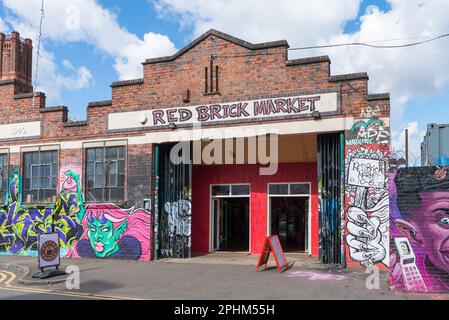
These markets are centred on Brick Lane in East London and boast a thriving Bangladesh community. Brick Lane Market London, also known as The Truman Markets, isn’t just one market but five different markets weaved into one. This report employs a combination of primary interviews with executives, procurement leaders, and engineering consultants, as well as secondary research such as trade publications and policy documents. Quantitative analyses are validated through statistical triangulation, whereas qualitative themes are vetted by subject-matter experts and external reviewers for consistency and relevance.
Check Out The Best Selling LEGO Minifigures Of 2024:
These companies are developing bricks made from recycled materials, low-energy manufacturing processes, and eco-friendly designs. Their ability to cater to the growing demand for green building materials makes them formidable competitors. The COVID-19 infection has not stopped the building sector from operating, thus market growth for blocks and bricks may stabilise. Construction companies are speeding their investment plans, which will involve the use of cutting-edge building materials, in an effort to make up for the losses they experienced. However, a new coronavirus pandemic that is hitting important construction centres like India may cause this industry’s growth trajectory to stagnate over the next years. Over the past several years, the brick industry in India has experienced tremendous growth due to the increase of infrastructure and building activities.

LEGO Sets
As the name implies, the Tea Rooms is a market that was named for its large selection of coffees, teas, and traditional baked goods. It’s a treasure trove for those looking for cool vintage records, accessories, and a collection of unique trinkets. You’ll also learn about historical events about the area as you explore Shoreditch and Brick Lane.
Governments are increasing social-housing budgets to narrow deficits—India alone recorded an 18.7-million-unit gap in 2024, while Indonesia tallied 12.5 million units, each amplifying baseline need for bricks. Equipment upgrades that raise kiln capacity without higher fuel burn ensure contractors receive on-time deliveries during cyclical building surges. The global bricks market is projected to grow from USD 1.79 trillion in 2025 to over USD 2.36 trillion by 2034, registering a CAGR of 3.09%. Key growth drivers include increased construction activity, sustainable building practices, and rising demand in residential, infrastructure, and modular applications across North America and Asia-Pacific. Increasing population propels further urbanization, which supports the need for affordable housing and infrastructure. New zones require numerous new constructions where urbanization demands renewal and redevelopment with increasing bricks application in these areas.